The Veil as the Final Disguise
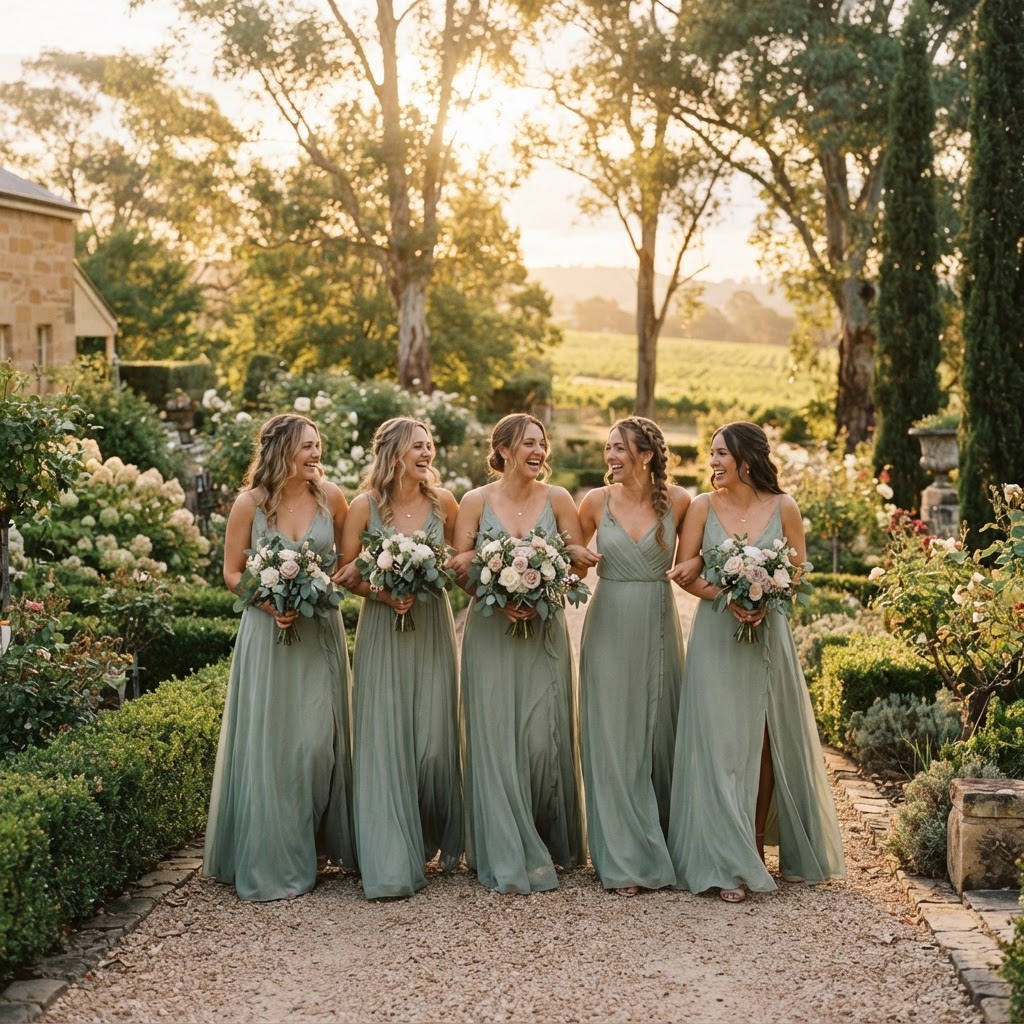
The bridal veil is older than the wedding dress, older than the ring, older than almost every other element of the ceremony. Its origins lie in the same ancient belief that gave us matching bridesmaids — the conviction that a bride, on the threshold of marriage, was vulnerable to the malicious attention of spirits who might curse or steal her away before the union was sealed.
The veil was the last layer of defence. Where the bridesmaids were decoys — identically dressed to confuse the spirits about which woman was the bride — the veil concealed her face entirely. A spirit could not curse what it could not see. The veil was not modesty. It was protection.
The Roman Flammeum
In ancient Rome, the veil was so central to the wedding that the bride was said to be veiled for marriage — nubere, the Latin verb that gave us "nuptials," literally means "to veil." The Roman bride wore the flammeum, a distinctive veil of saffron-yellow or flame-orange, draped over her head and face as she was led to her husband's home. The colour was associated with fire, with the sun, and with the protective power of the gods — the same saffron that draped the statues of Jupiter on festival days.
The flammeum was not a delicate wisp of tulle. It was a heavy, conspicuous garment, and it marked the bride as sacred for the duration of the ceremony. When the veil was lifted at the end, the bride crossed from the protection of her father's household into the protection of her husband's. The lifting was the threshold.
The Lift and the Kiss
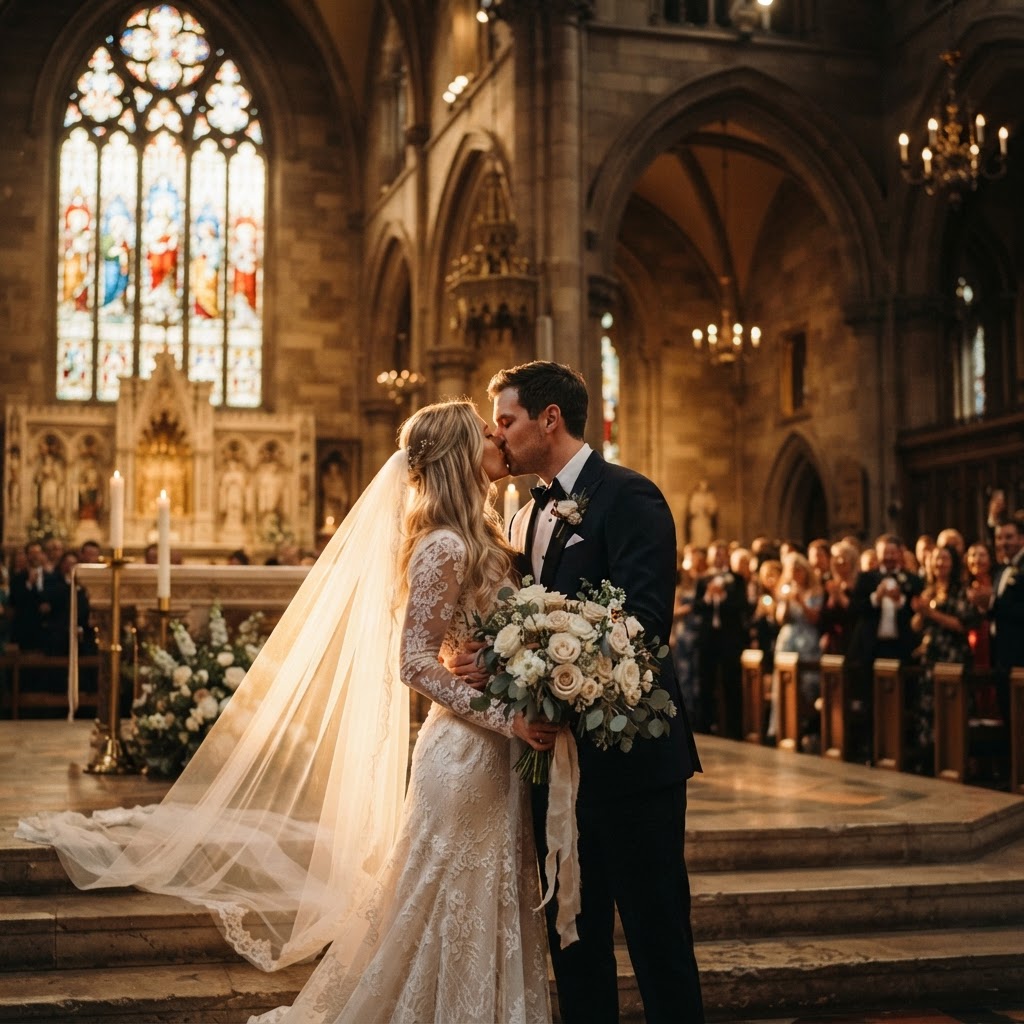
The moment the veil is lifted is the moment the disguise ends and the bride is revealed — and for centuries, that reveal was paired with the first kiss. The veil and the kiss are ceremony companions: the veil conceals, the kiss reveals. In the same way that the first kiss sealed the Roman contract, the lifting of the veil was the visual seal — the moment the assembled guests saw the bride's face for the first time as a married woman.
This is why the veil lift is one of the most photographed moments of the ceremony. It is the instant where concealment becomes revelation, where protection becomes intimacy, and where the bride steps from behind the shield and into the light.
The Veil We Know
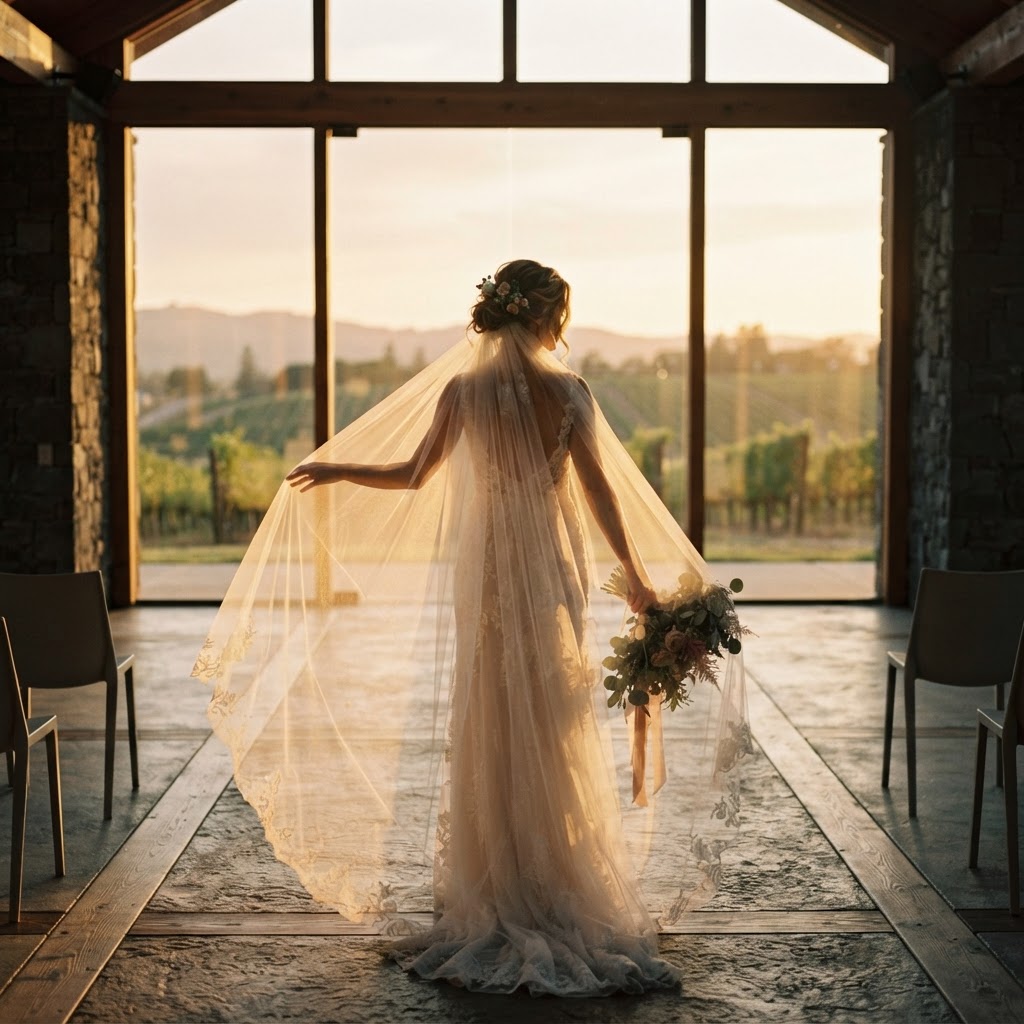
The belief in wedding-crashing spirits has faded. The veil has not. Today's veils range from cathedral-length cascades of tulle to short blusher veils worn over the face for the walk down the aisle and lifted by the groom or the father of the bride before the vows. The reasons have changed — the veil is worn now for tradition, for beauty, for the drama of the reveal — but the gesture carries its history in every fold.
The next time you see a bride lift her veil at the altar, you are watching the last remnant of an ancient act of protection become a moment of pure revelation.