A Rhyme That Outlived Its Origins
Few wedding customs have survived quite so intact, word for word, as this one. Most traditions evolve or fade — the rhyme about old, new, borrowed and blue has simply been repeated, generation after generation, almost unchanged since it first appeared in print in the 1800s. It's less a ritual than a shopping list, and that's precisely why it has endured: it's practical, it's poetic, and it gives every bride a small, private task to complete before she walks into the rest of her life.
The full rhyme, as it was recorded in a Victorian English folk collection, reads: "Something old, something new, something borrowed, something blue, and a silver sixpence in her shoe." That last line rarely makes it into modern weddings, but the first four clauses have become so embedded in wedding culture that most brides can recite them without knowing where they came from.
Lancashire Beginnings
The custom is generally traced to Lancashire, in the north of England, sometime in the Victorian era — a period obsessed with symbolism, sentiment, and the idea that every object a bride wore or carried should mean something. Each line of the rhyme carried its own small piece of folk wisdom, assembled not for fashion but for protection and blessing.
Something old represented continuity — a link to the bride's family and her life before marriage, often a piece of jewellery passed down from a mother or grandmother. It was a way of carrying forward the love and luck of the generations that came before her.
Something new symbolised optimism — the bride's hope for success and good fortune in her new life, usually represented by the wedding dress itself, bought or made especially for the occasion.
Something borrowed was perhaps the most superstitious of all. In Victorian England, it was considered good luck to borrow an item from a happily married woman, the idea being that her joy and good fortune would transfer, however briefly, to the bride wearing it. It was common for the borrowed item to be returned afterwards, as keeping it was thought to reverse the luck.
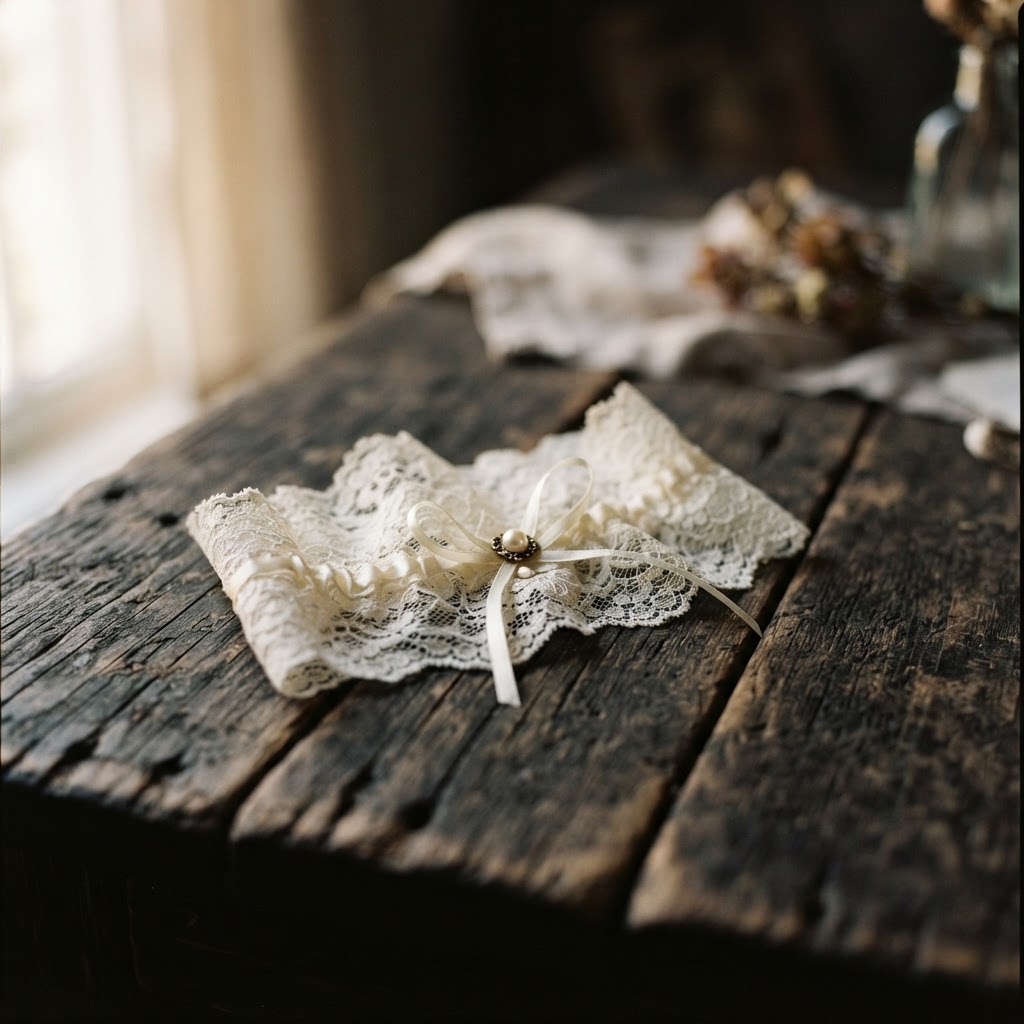
Something blue reaches back further still, to far older associations between the colour blue and fidelity, purity and love — associations that predate the Victorian rhyme by centuries. In ancient Israel, brides wore a blue ribbon on their wedding attire to symbolise purity; in medieval Europe, blue was linked to the Virgin Mary and to loyalty. By the time the rhyme was composed, blue had already carried centuries of meaning — the Victorians simply folded it into their tidy four-line formula.
The Sixpence Nobody Remembers
The final line of the rhyme — a silver sixpence in her shoe — has almost entirely disappeared from modern practice, but it was once considered essential. The sixpence was meant to ensure wealth and prosperity for the couple, tucked into the bride's left shoe on the morning of the wedding. Some families still observe it quietly, slipping a coin (any coin will do, since sixpences are long out of circulation) into a shoe before the ceremony.
Why It Still Matters on the Morning Of
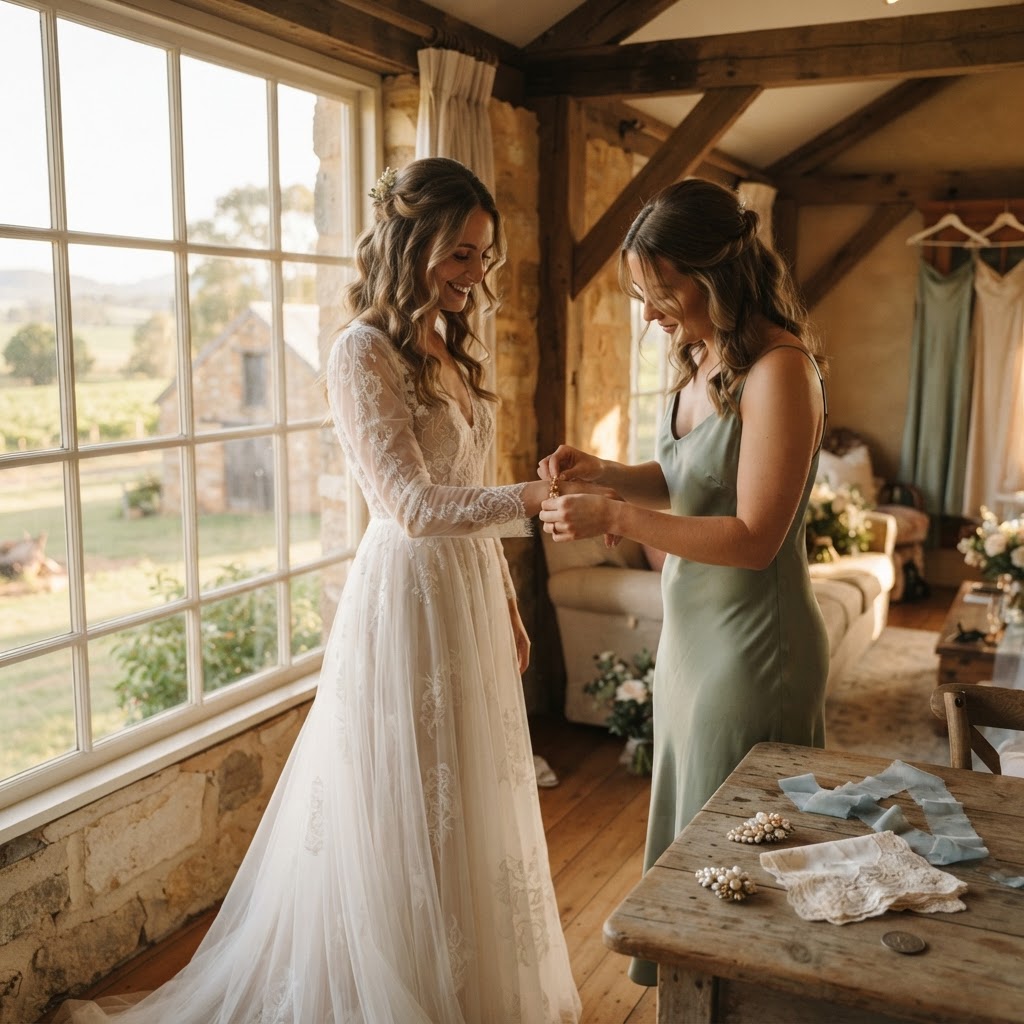
What I find most interesting about this tradition, photographing weddings across the Hunter and Newcastle, is how personal it becomes in practice. It's rarely performative — nobody announces it to guests. It happens quietly, in a bedroom or a getting-ready suite, often with a mother or a bridesmaid helping thread an earring or clasp a bracelet. The