The Kiss That Sealed the Contract
In ancient Rome, a kiss was not just affection — it was law. The osculum, the ritual kiss, was the seal that made a contract binding, and a marriage was a contract like any other. When a couple kissed at the end of the ceremony, the union was sealed — not by a signature on a page, not by the exchange of rings, but by the press of lips in front of witnesses. No kiss, no contract. The kiss was the signature.
The Romans took this seriously. The osculum had to be witnessed to be valid, which is why the ceremony kiss happened in front of the assembled guests — the same people who would later attest that the seal had been made. The kiss was not private. It was public, legal, and binding.
The Breath and the Blessing
There is an older layer beneath the Roman law. In many ancient cultures, the kiss carried a spiritual weight — the exchange of breath was an exchange of souls, a mingling of spirit that went beyond the body. In early Christian ceremonies, the priest would pass the "kiss of peace" to the groom, who passed it to the bride, a chain of blessing that ran from the church through the couple and into the marriage itself.
The first kiss as husband and wife was, for centuries, a sacramental act — the moment the spiritual bond was sealed as firmly as the legal one. The breath that passed between the couple was believed to carry a portion of each person's spirit into the other. To kiss was to share a soul.
The Kiss We Know
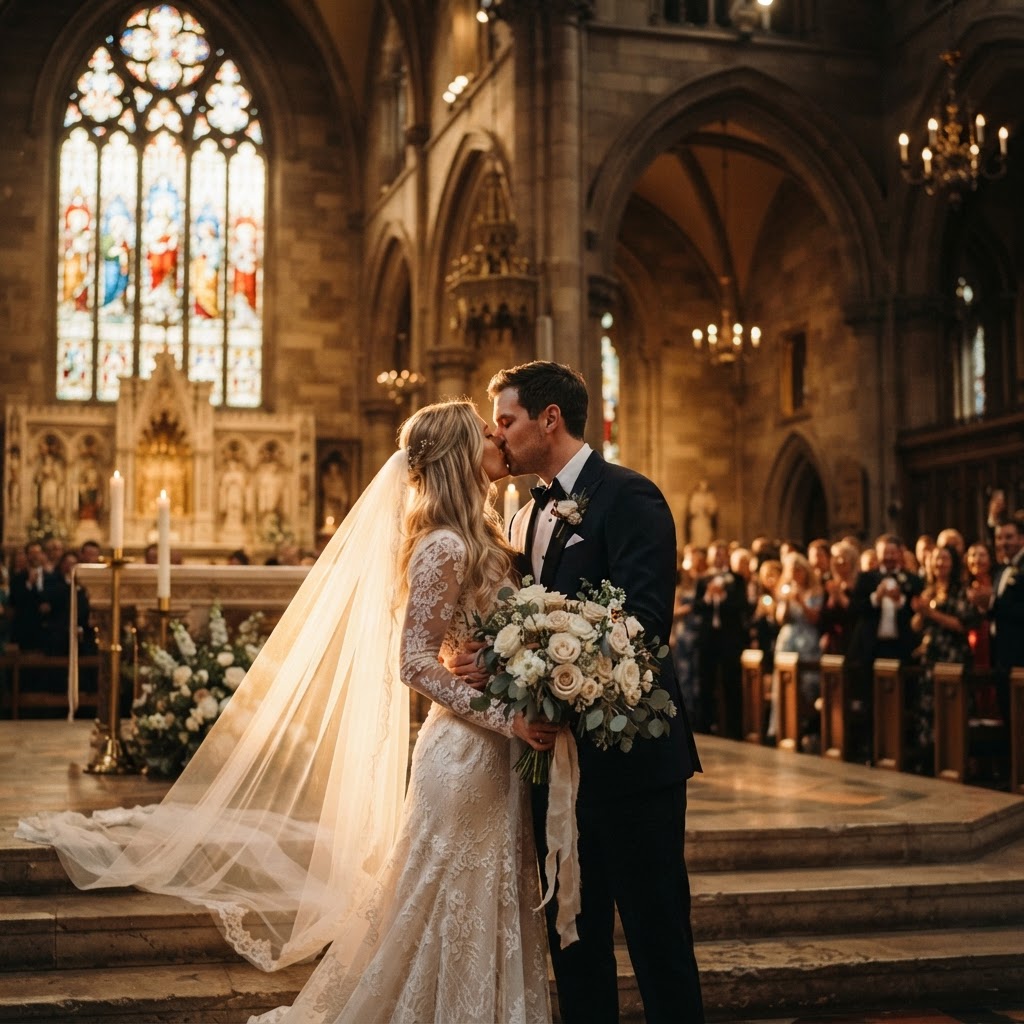
Today the first kiss is the punctuation mark of the ceremony — the moment the room exhales, the moment the phone cameras go up, the moment the couple turns to face the people who came to watch them promise forever. It is the last ritual act before the celebration begins, and it carries all the weight of its history in a single second.
The kiss that was once a legal seal is now a declaration. But it still does what it always did. It makes the marriage real, in front of everyone, and it marks the exact moment the waiting ends and the wedding begins.