The Circle Without an End
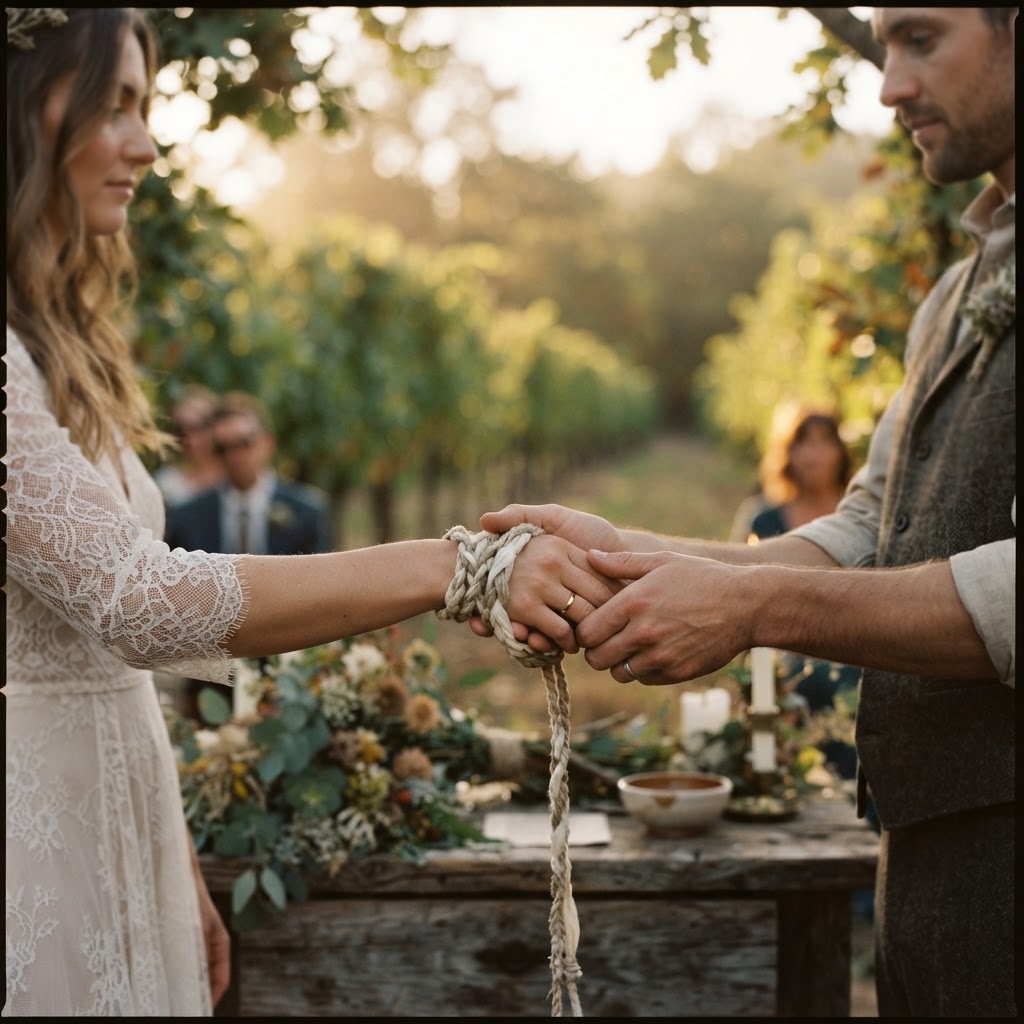
The wedding ring begins in ancient Egypt, where the first rings were braided from papyrus and hemp. The Egyptians chose the circle not for its beauty but for its meaning: a shape with no beginning and no end, the perfect symbol of eternity. A ring given in marriage was a ring that said, in its very geometry, that this bond would not be broken.
The hole at the centre was no accident either. The Egyptians saw it as a gateway — a door to a future the couple would walk through together. The ring was not decoration. It was a small, wearable philosophy of forever.
The Vein of Love
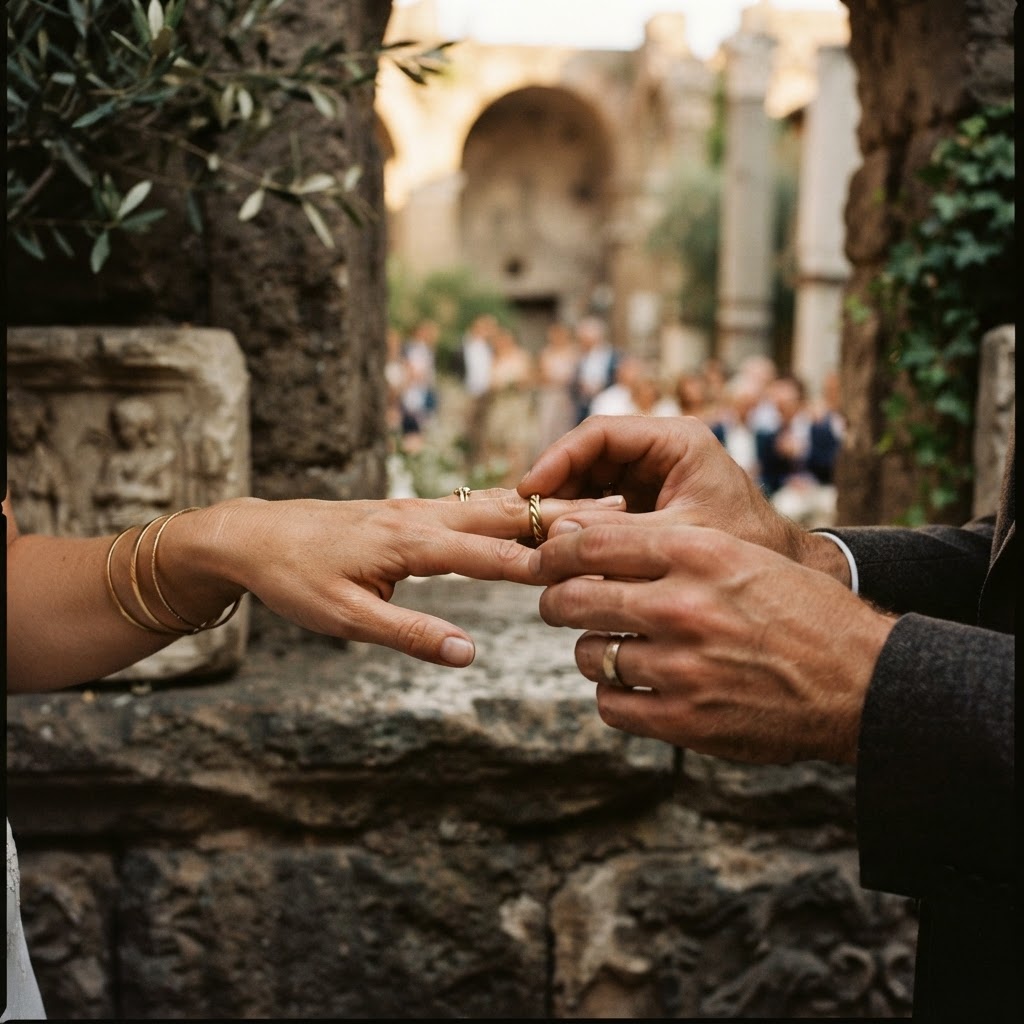
The Romans carried the tradition forward, and it was Rome that gave us two of the ring's most enduring customs. The first was the metal: iron, not gold, because iron was the metal of strength — a ring that would not bend, for a vow that would not break. The second was the finger. Roman physicians believed a vein ran directly from the fourth finger of the left hand to the heart. They called it the vena amoris — the vein of love. Placing the ring on that finger was not fashion. It was anatomy as faith.
The science has long since been disproven — there is no single vein running from the ring finger to the heart. But the finger has never moved. Two thousand years later, the ring still finds the same hand, the same finger, for the same reason.
The Diamond and the Vow
For most of history, the ring was plain. Gold, iron, a simple band. The diamond wedding ring is a modern invention — and a surprisingly recent one. Until the 1930s, a diamond engagement ring was a rarity, a luxury of the very wealthy. It was a single advertising campaign, launched in the United States in 1947, that gave the world the line "A diamond is forever" and turned the diamond ring from an exception into an expectation.
The double-ring ceremony — both partners wearing rings — is newer still. For centuries, only the bride wore a ring. The groom's wedding band did not become common until the Second World War, when men going off to war began wearing rings to carry their wives with them. The ring was no longer a token given. It was a bond shared.