A Walk Rooted in Ownership, Not Romance
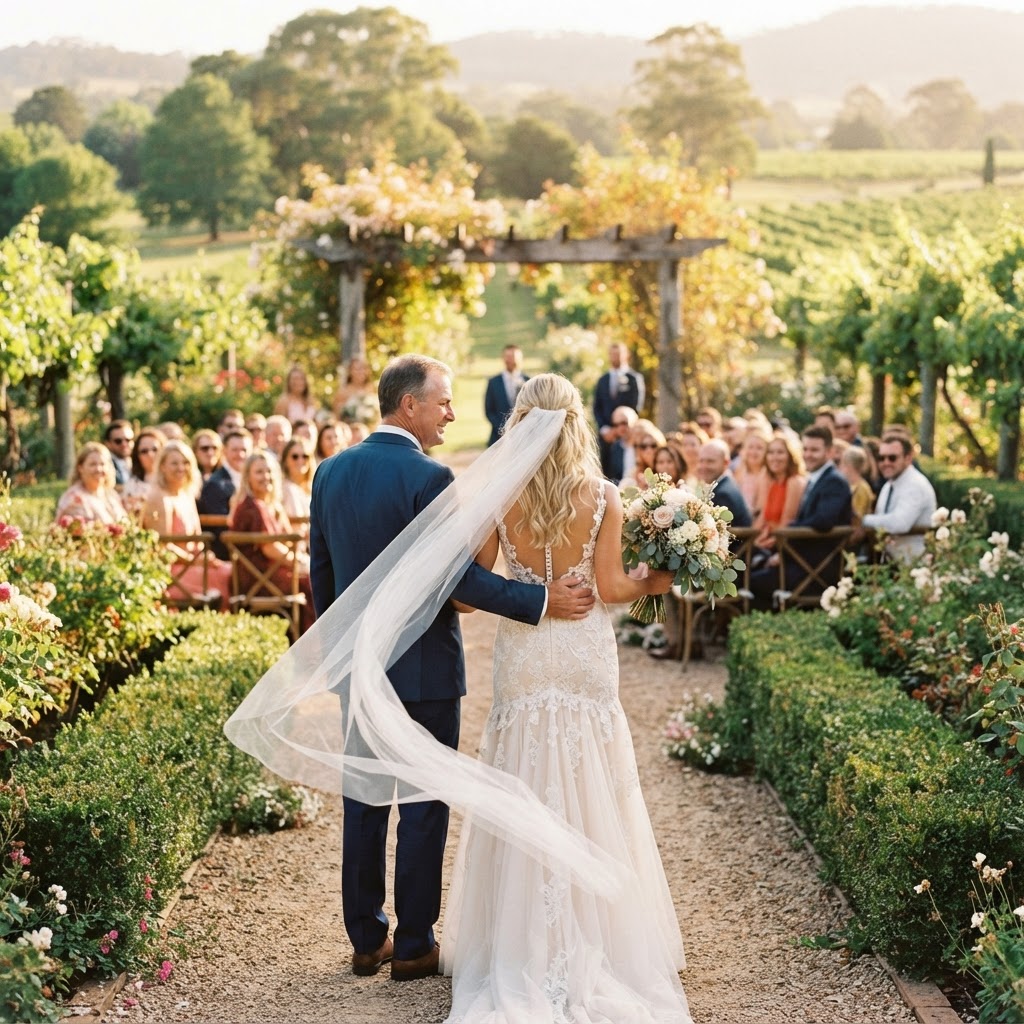
Few wedding moments carry more emotional weight than the bride's walk down the aisle — the hush that falls over a room, the turning of heads, the father's hand steadying his daughter's arm. It feels timeless and tender. But the tradition's origins are far more transactional than sentimental.
In Ancient Rome, marriage was frequently a legal and economic arrangement between families. A bride was escorted from her father's household to her new husband's, often accompanied by witnesses to ensure she arrived without being abducted or substituted — a very real concern in an era when marriages secured alliances, land, and dowries. The escort wasn't a gesture of love; it was a safeguard for a contractual exchange.
The Anglo-Saxon "Bride Price"
The custom hardened further in early medieval Europe, particularly among Anglo-Saxon and Germanic tribes, where marriage often involved a literal transfer of property — the bride herself considered part of that property. A father would walk his daughter to the groom and, in some rites, physically place her hand into his, symbolising the formal handover of guardianship from one man to another. The phrase "giving away the bride" descends directly from this practice, and for centuries it was taken almost literally.
Church weddings in medieval England formalised the choreography. Brides were walked to the church door — not yet inside — where the marriage contract and dowry were negotiated in public, in front of witnesses, before the couple entered for the religious blessing. Only later did the ceremony itself move fully inside the church, bringing the aisle walk with it.
From Contract to Ceremony
By the Victorian era, as romantic love became the socially accepted reason for marriage, the meaning of the walk began to shift — even as its structure stayed the same. The father-daughter escort softened into a symbol of blessing and support rather than a legal handover. Clergy began reframing the question "who gives this woman?" as an expression of parental love and consent rather than ownership transfer, even though the wording (and in many ceremonies, still today) echoes its older, starker meaning.
The white aisle runner, the pause at the threshold, the slow tempo of the processional march — all of these theatrical flourishes were added later, largely during the 19th and 20th centuries, to heighten the emotional drama of a moment that was once purely administrative.
A Tradition Rewritten by Modern Couples
Today, the aisle walk has been reclaimed and reimagined almost completely. Many brides are walked by both parents, by siblings, by chosen family, or choose to walk alone — arriving under their own power rather than being delivered. Some couples walk the aisle together, side by side, rejecting the asymmetry of the original custom entirely. Others keep the father-daughter walk purely as an act of love, stripped of its historical baggage, because the image itself — vulnerable, proud, unrepeatable — still resonates regardless of where it came from.
What's remarkable is how durable the choreography remains even as its meaning has been rewritten twice over: once by the Victorians, who turned a legal formality into a romantic gesture, and again by modern couples, who are turning a fixed tradition into a flexible, personal choice.
Why the Moment Still Lands
As a photographer, I find this one of the few genuinely unscripted seconds in a wedding day. Everything else can be planned, timed, rehearsed — but the look on a bride's face as the doors open, and the look on her escort's face beside her, happens exactly once, and it happens fast. It's part of why this walk has survived a thousand years of changing customs: not because of what it once meant legally, but because of what it means to witness it, right now, in real time.
Whether it's a father, a mother, both parents, a best friend, or no one at all, the aisle walk endures because it marks the exact threshold between two lives — the last few steps of being someone's daughter, son, sibling, or simply yourself alone, before stepping into a marriage. History gave the custom its shape. Couples today are quietly deciding what it means.