A Groom's Gauntlet
Long before a Scottish groom caught sight of his true bride at the end of the aisle, he might have had to prove he deserved her. In certain Gaelic-speaking communities of the Highlands and Islands, a peculiar and theatrical courtship custom unfolded on the morning of the wedding: the groom was presented, one by one, with a parade of false brides.
Veiled, cloaked, or disguised in borrowed shawls, these stand-ins — sometimes elderly aunties, sometimes giggling cousins, occasionally a man dressed as a woman for extra mischief — were led before the groom as though each might be his intended. He was expected to study each figure, resist the jeers of the gathered crowd, and declare, with a straight face, whether this was indeed his bride. Only after he had rejected several decoys was the real bride finally brought forward, often to a burst of pipes, laughter, and relief.
Why Test the Groom at All?
On the surface it reads as pure comedy, and in many households it surely was — a last chance to rag the groom before he settled into married life. But folklorists who have studied Gaelic courtship customs point to something deeper at work. In small, close-knit communities, marriages were rarely anonymous affairs; everyone knew everyone, and the idea of a groom failing to recognise his own bride was, on its face, absurd. The ritual's real purpose was not to test his eyesight but his resolve.
The False Brides custom belongs to a wider Celtic tradition of ritual obstruction — rites in which something stands between the groom and his bride: a locked gate, a riddle, a guardian who must be charmed or bribed before passage is granted. These threshold trials appear across Scottish, Irish, and Welsh folk practice, and they share a common logic. A marriage secured too easily was thought to invite misfortune or the mischief of restless spirits. By making the groom work — even symbolically — for the woman he was about to marry, the community dramatised the seriousness of the commitment he was undertaking.
There was also an older, more superstitious thread running beneath the laughter. In Highland folk belief, the day of a wedding was considered a moment of heightened vulnerability, when fairies and ill-wishers were thought to take particular interest in the bride. Some ethnographers have suggested the false brides functioned as a kind of decoy for supernatural attention — confusing any malevolent eye that might otherwise fix itself on the real woman at the centre of the day. Whether the families who practised it believed this literally or simply enjoyed the inherited performance of it is now impossible to say; by the time folklorists were recording the custom in the nineteenth century, it survived mostly as theatre, a beloved piece of wedding-morning fun rather than a sincere charm against misfortune.
A Rite of Nerve as Much as Recognition
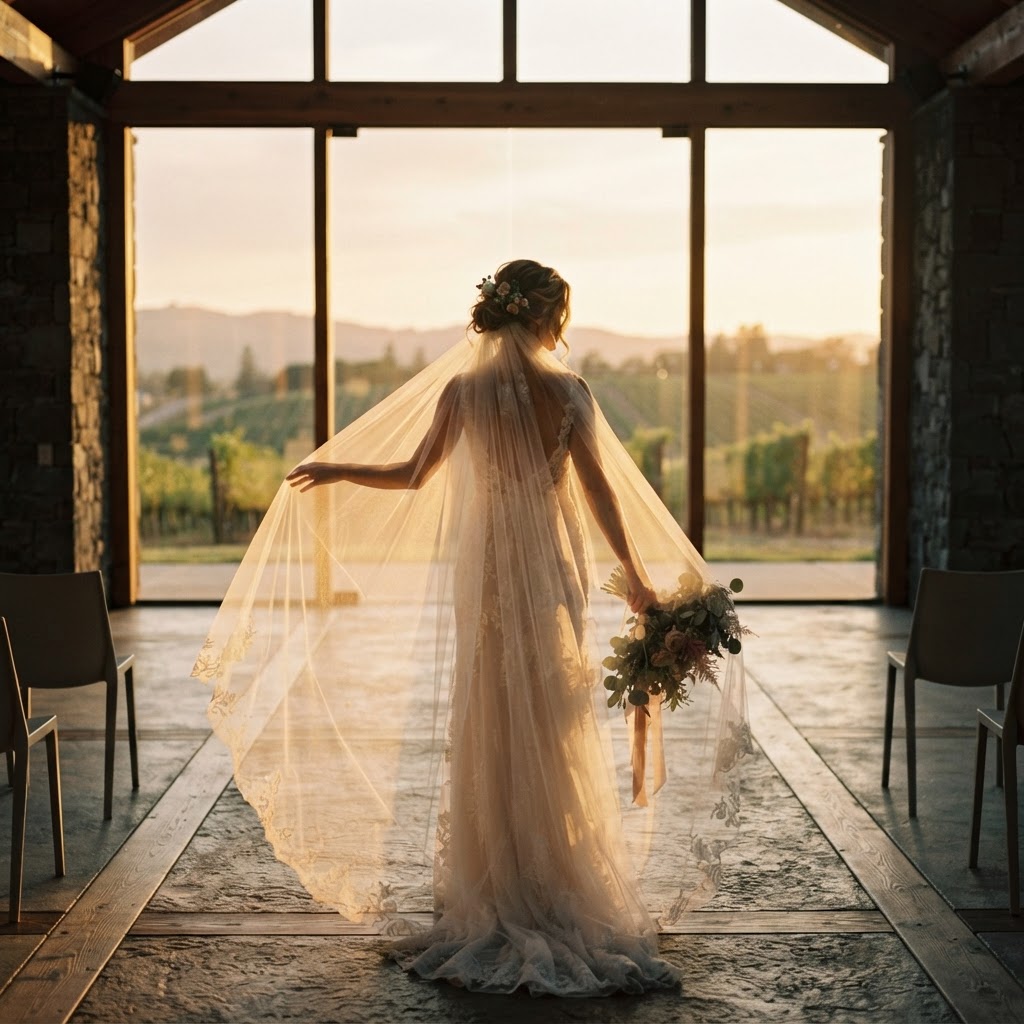
What makes the custom so compelling, even at this distance, is how neatly it compresses the emotional architecture of a wedding day into a single scene. The groom's journey toward his bride was never meant to be instantaneous. It was meant to be earned, witnessed, and a little bit nerve-wracking — values that still sit at the heart of the first-look and aisle-reveal moments couples create today, even if the mechanics have changed entirely.
The custom also reveals something about the communal nature of Gaelic weddings. The false brides were not strangers; they were aunts, grandmothers, best friends — women who had likely helped raise the groom or watched the courtship unfold from the sidelines. Their appearance in disguise was a final act of communal teasing before they stepped back and let the real union take centre stage. In this sense, the ritual functioned much like a verbal toast or a best man's speech does now: an affectionate roasting that cleared the air before the solemn part began.
By the twentieth century, as Highland communities modernised and wedding customs consolidated around church ceremonies and reception halls, the False Brides custom faded from practice, surviving mainly in folklore collections and the memories of older Gaelic speakers. Yet its spirit — the idea that a groom's resolve should be tested, that laughter belongs beside solemnity, and that the moment of recognition should feel earned rather than assumed — never fully disappeared from the wider cultural memory of Scottish weddings.
Why It Still Resonates
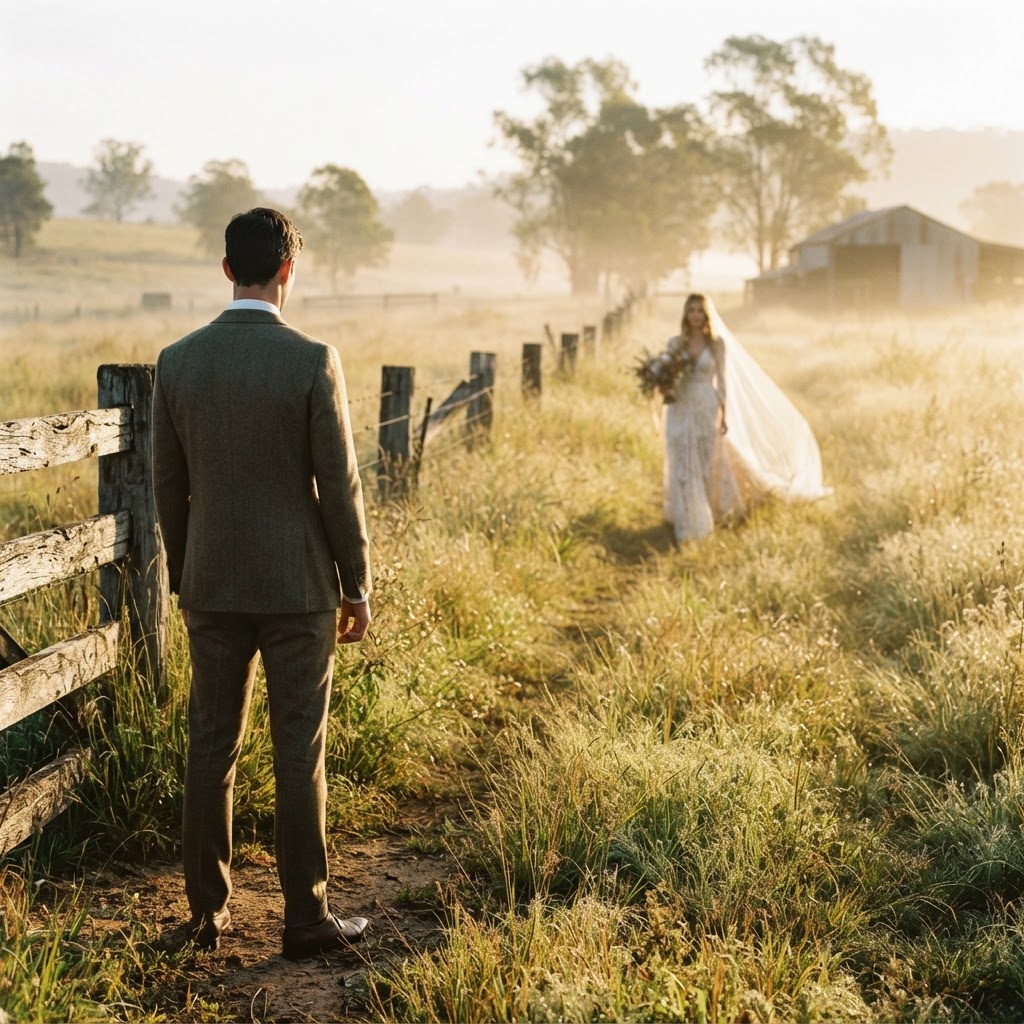
Modern couples don't stage decoy brides, but many still build suspense deliberately into their wedding morning: a first-look staged in a vineyard laneway, a veil lifted at the aisle rather than before, a groom asked to wait with his back turned until the exact right second. The impulse is the same one that animated those Highland mornings centuries ago — the instinct that recognition matters more when it has been delayed, and that love is most visible in the moment just before it's confirmed.
Behind the Lens in the Hunter
I love staging a deliberately delayed reveal at Little Valley Farm, where the long grass paddocks and timber fence lines give a groom somewhere to wait, listen, and wonder before his bride appears. There's a particular stillness in the seconds before recognition — shoulders dropping, breath catching — and it's one of my favourite things to capture on a wedding morning.