A Marketplace Ritual Older Than the Cake
Long before a white-iced, multi-tiered confection became the undisputed centrepiece of the reception table, medieval English couples built their fortune out of something far humbler: small spiced buns, stacked as high as hands and nerve would allow. There was no pastry chef, no scaffolding of dowels and ribbon — just bride, groom, and a wobbling tower of sweet bread balanced on a trestle table in the churchyard or marketplace.
The custom likely grew out of necessity as much as symbolism. In medieval England, sugar was a luxury almost nobody could afford, and the elaborate cakes we know today simply didn't exist. What ordinary households could produce were small, spiced buns — dense, warmly fragrant with nutmeg, cinnamon, and dried fruit, baked in batches for feast days and festivals. Wedding guests were encouraged to bring a bun or two of their own, piling their contribution onto a growing mound at the centre of the celebration. The more guests, the taller the tower — a visible, edible measure of how beloved the couple was within their community.
The Kiss Over the Buns
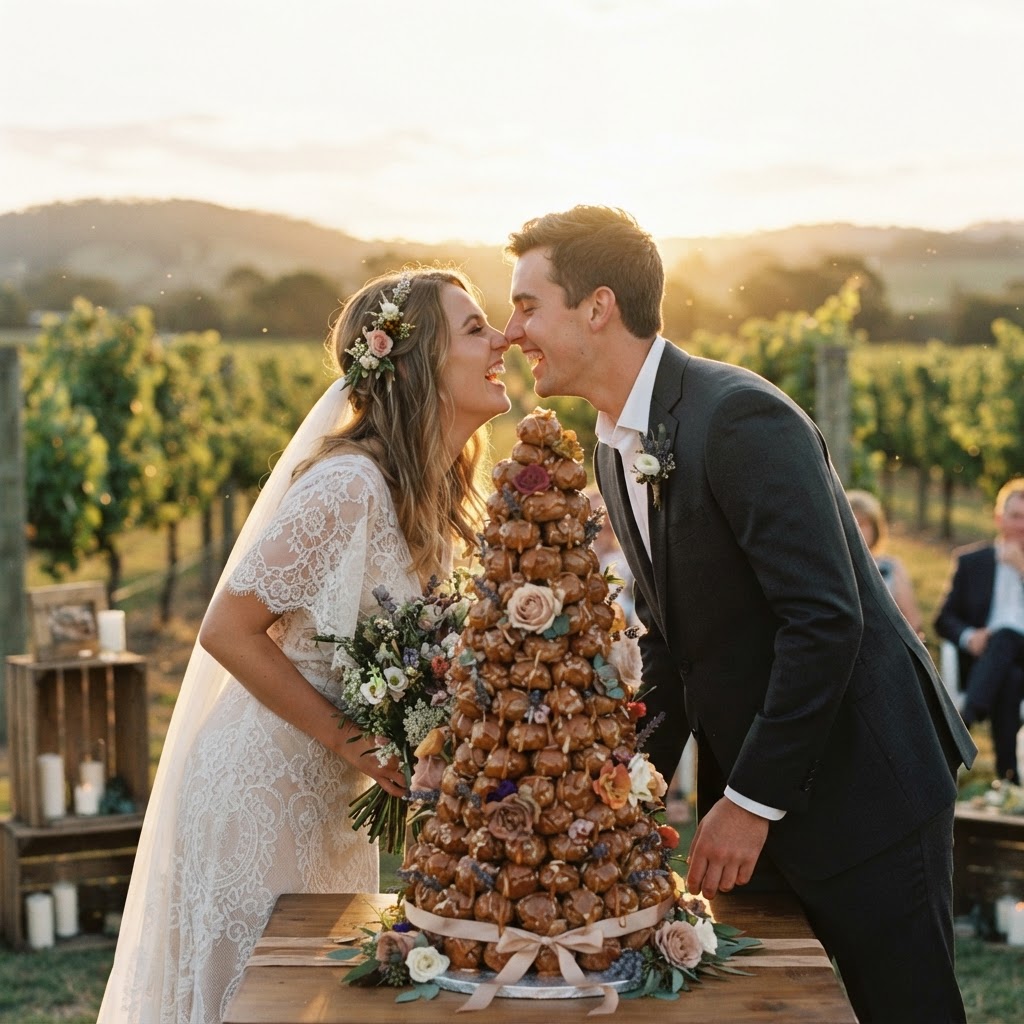
Here the custom takes its most charming — and precarious — turn. Once the tower reached its full, teetering height, bride and groom were invited to lean in from opposite sides and attempt to kiss over the top of it, without so much as grazing a single bun. If they managed it, tradition promised them a lifetime of prosperity, fertility, and good fortune. If the tower collapsed mid-kiss (as, one imagines, it frequently did), the omens were rather less kind.
It's worth pausing on just how theatrical this moment must have been for medieval wedding guests. There was no photographer to capture it, no slow-motion replay — just a crowd holding its collective breath as two people stretched across a mountain of bread, equal parts romance and risk. It's one of the earliest recorded examples of a wedding ritual built entirely around a shared, public moment of jeopardy — not unlike the modern first dance, where everyone watches to see if the couple will pull it off.
Enter the Baker's Dozen
The phrase "baker's dozen" — thirteen instead of twelve — has murky origins, but one enduring theory ties it directly to the wedding bun tower. English bakers, wary of being accused of short-changing customers (a crime that could carry serious fines, or worse, under medieval trade law), began throwing in an extra bun or loaf for good measure whenever a dozen was ordered for a wedding feast. Thirteen buns meant no one could claim they'd been cheated — a small act of insurance that became baked into the language itself.
Whether or not this is the literal origin of the phrase, it speaks to how deeply embedded bread was in medieval wedding economics. Bakers were essential tradespeople at any wedding feast, and the quality and height of the bun tower often reflected the standing — and generosity — of the families involved.
From Buns to Tiers: The French Refinement
By the seventeenth century, the humble bun tower had drifted across the Channel and into French kitchens, where pâtissiers began icing the stacks together to stop them collapsing entirely — reportedly after a visiting French chef witnessed the English custom and was horrified by its instability. That act of icing the buns into a single, stable structure is widely credited as the direct ancestor of the modern tiered wedding cake, and eventually evolved into the croquembouche, the tower of choux pastry still served at French weddings today.
It's a lovely thought: every towering, fondant-smoothed cake cut at a reception today traces its lineage back to a pile of spiced buns and a couple willing to risk it all for a kiss.
Luck, Fertility, and the Logic of Excess
Medieval wedding customs were rarely decorative for decoration's sake — most carried deeper anxieties about fertility, prosperity, and survival in a world where all three were precarious. A towering stack of food, successfully shared without collapse, symbolised abundance the couple hoped would carry into their married life: full tables, full harvests, full households. The kiss sealed the wish, in the same way a modern couple might make a silent vow while cutting their cake together.
A Modern Echo in the Hunter Valley
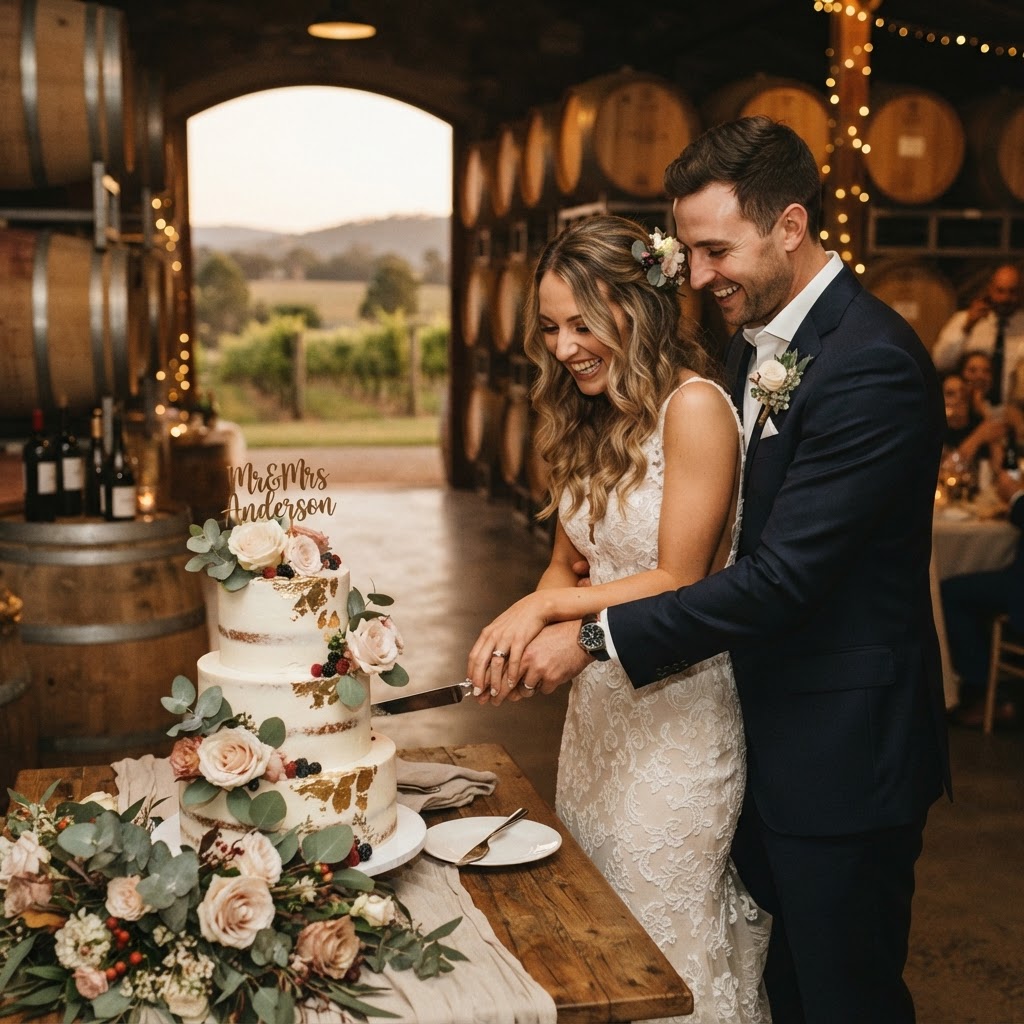
While you won't often see a literal bun tower at a reception these days, its spirit lives on in croquembouche displays, dessert tables, and even the playful tradition of the cake-cutting photo — a moment still treated as a small, shared test the couple performs together, in front of everyone who loves them.
There's something rather fitting about photographing this lineage against the backdrop of the Hunter Valley, where food, wine, and celebration have always been intertwined. At Audrey Wilkinson Vineyard, I've watched modern couples lean in for a kiss beside towering dessert displays with the vines rolling out golden behind them — and I always think of those medieval guests, holding their breath, waiting to see if the buns would hold. The stakes are lower now, but the instinct to turn food into a shared ritual of luck hasn't changed in eight hundred years.