A Roman Crumb for Fertility
The wedding cake begins not with icing and tiers, but with a loaf of barley bread. In ancient Rome, the groom would break the bread over the bride's head — a gesture meant to bless the couple with fertility and good fortune. Guests would then scramble to eat the crumbs that fell, believing that consuming a piece of the wedding bread would bring them luck in their own lives.
It was messy, physical, and deeply symbolic. The bride stood beneath a rain of broken bread, and the community shared in the blessing by eating the evidence.
The Medieval Stack
By the Middle Ages in England, the bread had evolved into spiced buns and sweet cakes. Guests would bring small cakes and stack them as high as possible — the taller the stack, the greater the prosperity for the couple. The bride and groom were challenged to kiss over the top of the pile without toppling it. If they managed, a lifetime of prosperity awaited.
This tower of cakes is the direct ancestor of the tiered wedding cake we know today. The shape remained even as the meaning shifted from a communal game to a centrepiece.
The Modern Cut
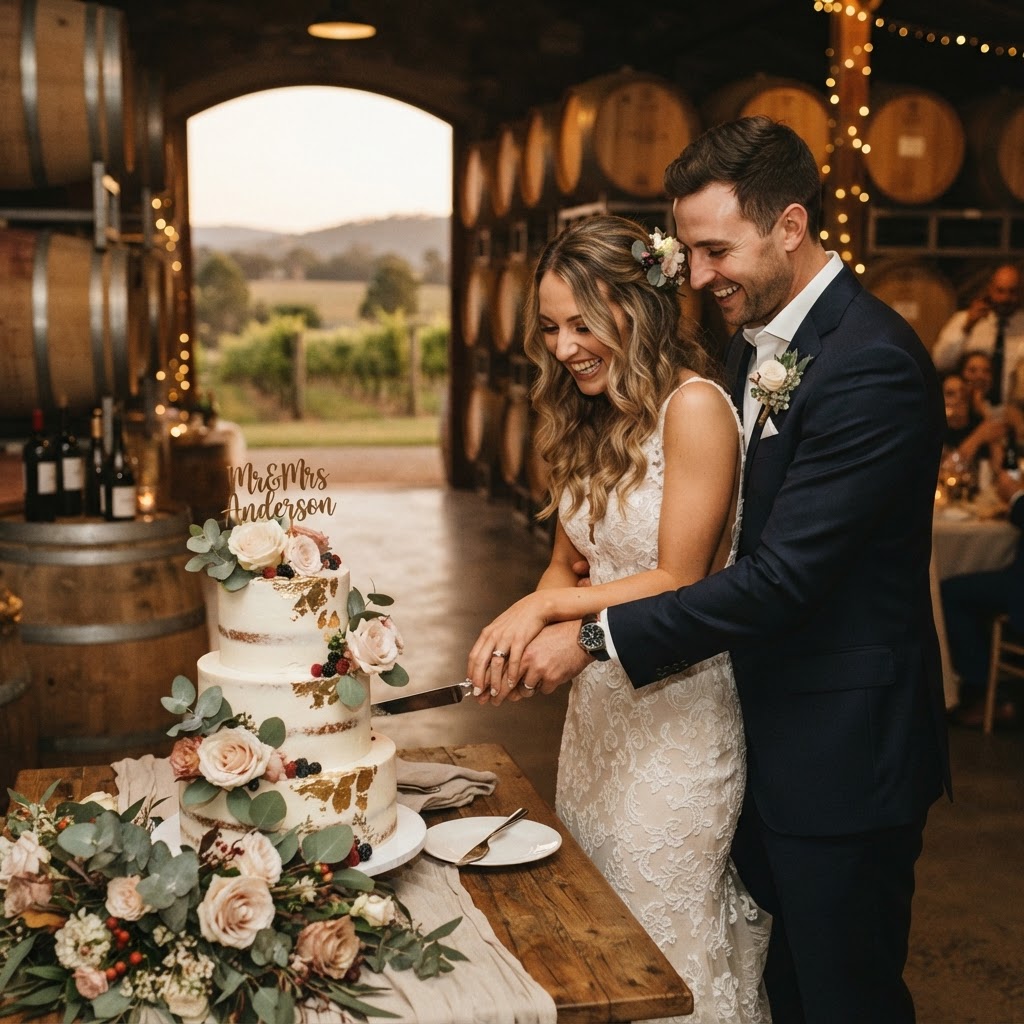
The act of cutting the cake together — the bride's hand guiding the groom's on the knife — emerged as a Victorian refinement. It was one of the first joint tasks a married couple performed in public, a small ceremony within the ceremony. The feeding of the first slice to one another followed, and the playful smearing of icing that couples still do today is a modern, lighter echo of that ancient breaking of bread.
The crumbs are gone. The fertility blessing is forgotten. But the gesture — two people sharing the first piece of something sweet, together — endures.