
A Reception Ritual Born of Scissors and Song
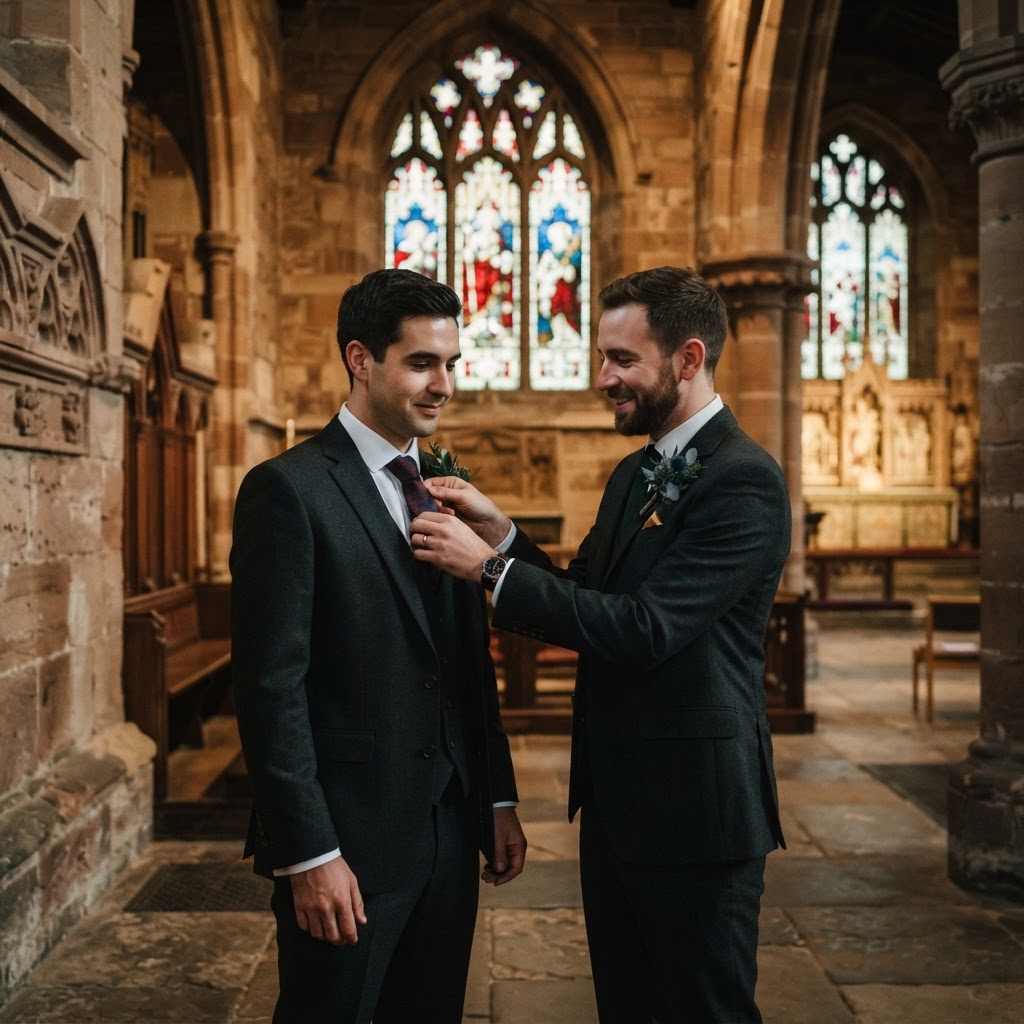
Late in an Italian wedding reception, long after the antipasti have been cleared and the dancing has properly begun, the groom is pulled into the centre of the room. Someone produces a pair of scissors. His tie — carefully chosen, carefully knotted that morning — is about to be destroyed, piece by piece, to a chorus of laughter and applause. This is taglio della cravatta, the cutting of the groom's tie, one of Italy's most theatrical and least-known wedding customs outside its own borders.
The ritual's exact origins are murky, as is the case with most grassroots traditions that grew out of community rather than court. Most historians trace it to post-war southern Italy, when working-class families — rebuilding after years of hardship — needed every lira they could gather for a young couple starting out. The groom's tie became an impromptu collection plate. The best man, or sometimes a particularly cheeky uncle, would snip the tie into strips, then auction each piece to the gathered guests. Whoever wanted a souvenir — or simply wanted to be seen raising the bid — paid for the privilege, with the proceeds handed straight to the newlyweds for their honeymoon or their first home.
Why the Tie, and Why Cut It?
In mid-century Italy, a well-made tie was a genuine luxury, often the most expensive item a working man owned. Sacrificing it in front of friends and family was a visible, almost theatrical act of generosity — the groom literally giving away something valuable for the sake of his new marriage. Cutting it rather than simply removing it heightened the drama; there was no taking it back. The ritual also carried a wink of symbolism: the tie, knotted tightly around the neck, represented the bachelor's constraints. Snipping it apart was as much a release as a fundraiser — a theatrical shedding of single life, performed for an audience who'd known the groom since he was a boy.
In some regions, particularly in the south, the tradition took on an added layer of mock ceremony. The best man would present the cut pieces on a tray or in a basket, calling out prices with the flourish of a market trader, while guests good-naturedly haggled or simply tossed in notes for the fun of it. The bride, meanwhile, often played compère, keeping the energy high and the bids coming.
From Village Custom to National Habit
What began as an informal, almost improvised act of communal generosity gradually solidified into expected reception entertainment across much of Italy, and later among Italian diaspora communities in Australia, the Americas and beyond. By the 1960s and 70s it had become common enough that tie manufacturers in some regions reportedly sold cheaper "ceremonial" ties specifically intended to be sacrificed at the reception — sparing the groom's good tie for the ceremony photographs.
The tradition has proven remarkably durable because it does several things a good reception ritual needs to do: it involves the whole room, it's visually and emotionally charged, and it gives guests a tangible, slightly cheeky way to contribute to the couple's future. Unlike a quiet envelope slipped at the door, the tie-cutting makes generosity loud, public and a little bit competitive — which, if you've ever watched a room full of Italian relatives bidding against each other for a two-inch strip of silk, is precisely the point.
A Living Tradition, Reinterpreted
Modern Italian-Australian weddings I've photographed still carry echoes of this custom, though it's often softened for a contemporary crowd — fewer scissors flashing mid-speech, more a nod to heritage with the groom's father or best man cutting a symbolic single strip before the real auction (usually of garters, shoes or other playful reception props) takes over. Some couples skip it entirely in favour of a straightforward speech-and-toast structure, but for families with strong roots back to Calabria, Sicily or Puglia, it remains a beloved, unmissable moment — one more thread connecting a Hunter Valley marquee to a nonna's wedding fifty years earlier in a village piazza.
What I love most about photographing it is the unpredictability. No two tie-cuttings play out the same way — the groom's face when the first snip lands, the best man hamming it up like an auctioneer, the bride laughing somewhere just out of frame. It's one of those rare reception moments that can't be staged or rehearsed, which is exactly why it photographs so beautifully.
The Pull-Quote Worth Knowing
It's the kind of detail that surprises most non-Italian guests at their first Italian wedding — right up until the scissors come out and the room erupts.