When couples start researching wedding photographers, the first thing they notice is that everyone seems to describe their style differently — documentary, fine art, editorial, candid, photojournalistic, posed, natural, timeless. It can feel like a foreign language. But underneath all the labels, almost every wedding photographer sits somewhere on a spectrum between two approaches: documentary and posed. Understanding the difference — and knowing where you want your photographer to sit on that spectrum — is the single most important decision you will make about your wedding photography. As a Newcastle wedding photography, I shoot roughly 70% documentary and 30% posed — and the blend is what gives you a gallery that is both a true record of the day and a collection of images you are proud to frame.
What is documentary wedding photography?
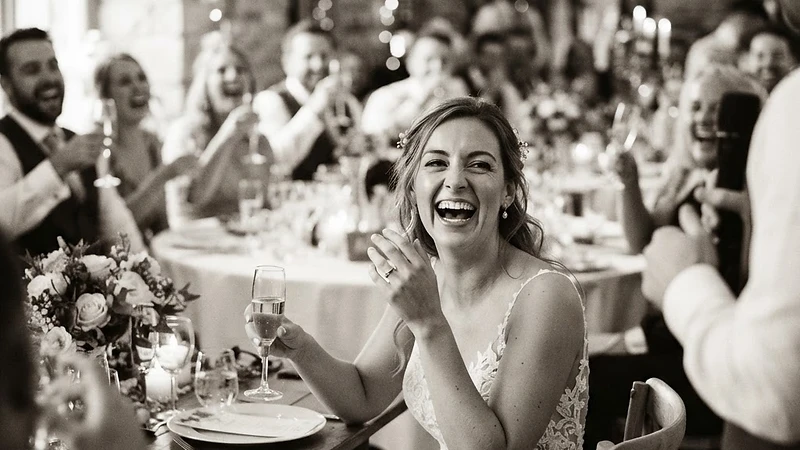
Documentary wedding photography — sometimes called photojournalistic or candid — is the art of capturing the day as it unfolds, without directing or staging anything. The photographer is a fly on the wall, watching for the moments that happen naturally: the nervous hands before the ceremony, the laugh during a speech, the tear a parent tries to hide, the chaos of the dance floor. Nothing is arranged, nothing is asked of you, and the result is a gallery that feels like a true record of the day rather than a performance of it.
The strength of documentary is authenticity. When you look at a documentary gallery in ten years, you will see the day as it actually happened — the real expressions, the real interactions, the things you did not see because you were in the middle of it. The weakness is that it is unpredictable. A documentary photographer cannot guarantee a specific shot, because they are not creating the moment — they are catching it. And if the moment does not happen, there is no photograph.
What is posed wedding photography?
Posed wedding photography — sometimes called fine art, editorial or traditional — is the art of composing the photograph. The photographer directs: stand here, hold hands like this, look at each other, smile. The couple is an active participant in the image, and the photographer is responsible for the lighting, the composition, the posing and the expression. The result is a gallery of polished, considered images that look like they belong in a magazine.
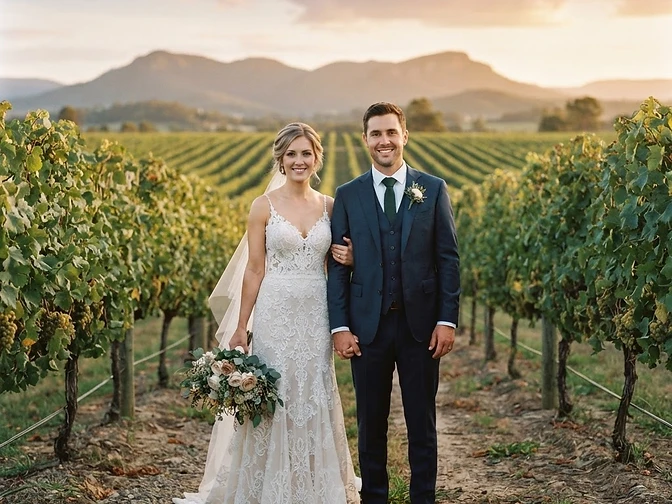
The strength of posed photography is control. A posed photographer can guarantee a beautiful portrait, because they are building it — the light, the angle, the expression are all their responsibility. The weakness is that it can feel stiff if the photographer is not skilled at making direction feel natural. A bad posed photograph looks like a school portrait. A good posed photograph looks effortless — but it is not, it is the result of a photographer who knows how to direct without making you feel like you are being directed.
Why most couples want both
Here is the honest truth: almost no couple wants a pure documentary gallery or a pure posed gallery. If you only have documentary, you will have beautiful candid moments but no polished portraits to frame. If you only have posed, you will have beautiful portraits but no record of the day as it actually happened. The best wedding photographers do not pick a side — they blend.
My own approach is roughly 70% documentary and 30% posed — the same blend I bring to Hunter Valley vineyard weddings and Newcastle beach ceremonies alike, and the same blend built into every one of our wedding photography packages. The ceremony, the reception, the getting ready, the dancing — all documentary. I am watching, not directing. The couple portraits, the family groupings and a handful of detail shots — those are posed, because I am responsible for making them look their best. The blend is what gives you a gallery that is both a true record of the day and a collection of images you are proud to put on a wall.
There is one ceremony moment that straddles the line perfectly — the veil lift. It is documentary in the sense that the emotion is real and unrepeatable, but it is posed in the sense that I have to be in position, pre-focused, and ready before it happens. The tradition of the veil is one of the oldest in the wedding ceremony, and the lift is the moment where concealment becomes revelation — a second of pure, unrehearsed feeling that the photographer has to anticipate, not direct.
Documentary captures the day you had. Posed captures the day you want to remember. The best galleries give you both.
How to choose your style
When you are looking at photographers, do not just look at whether their images are beautiful — look at the balance. Count how many of the images in their portfolio are candid moments versus composed portraits. If you see mostly posed portraits and very few candid moments, that photographer leans posed. If you see mostly candid moments and very few polished portraits, they lean documentary. Neither is wrong — but you should know what you are buying.
Ask yourself: in ten years, what do you want to see when you open your album? If the answer is "the day as it happened, the people, the emotion, the chaos," lean documentary. If the answer is "beautiful portraits of us, looking our best, that we can frame and pass down," lean posed. And if the answer is "both" — which it is for almost every couple I meet — find a photographer who can do both, and ask them how they balance the two. And if budget is a factor, our guide to affordable wedding photography shows how to get both styles without the premium price tag.
What I tell couples
When couples ask me what style I shoot, I say "documentary with a posed portrait session" — because that is what almost every couple actually wants. They want the real moments, the laughter, the tears, the things they missed — and they want a handful of beautiful portraits of the two of them that they can frame. The trick is not choosing one over the other. The trick is finding a photographer who can disappear when the moment is happening and step forward when it is time to compose.
If you are not sure what you want, look at a photographer's full gallery — not just their Instagram highlights. And if you are wondering what that level of photography costs in Newcastle, I have written a full pricing guide too. Their full gallery will tell you the truth about where they sit on the spectrum. And if you want to see how I balance the two, head to the portfolio — every gallery there is a blend of documentary and posed, and you will see the ratio shift depending on the couple and the day. And to hear from couples who have already been through it, see what our happy couples say about their wedding photography and packages. And if you are curious where this documentary shift is heading, our 2027 wedding trends guide traces what is shaping up for Newcastle and the Hunter Valley.